Coming Soon!

Coming Soon!

It can be a scary thing hearing from your dentist or doctor that you need a biopsy. If you or your dentist notice changes to the soft tissue of your mouth or something abnormal on x-ray, call us for an evaluation today.  There are several pathologic processes that can be associated with the soft tissue, teeth, and bones of the mouth.  Thankfully, many of these processes are benign (noncancerous).  We offer same day biopsy appointments where we look at the area, discuss the likely possibilities and either remove or sample the area.   The results of your biopsy take 5-10 days and will guide further treatment.

Depending on the location and size of your lesion, your procedure may be completed with local anesthesia or sedation.  There are many factors that contribute to this decision and the type of anesthesia is determined on a case by case basis.  

Your surgery may involve complete removal of your lesion or taking a small sample of the lesion to send to a pathologist for a diagnosis.  After a diagnosis is made, a final treatment plan is formulated.

The treatment for pathology varies greatly based on diagnosis and so does the recovery process.  You will be given post-operative instructions on the day of your appointment and a general idea of what to expect can be determined at your consultation.

For cancer, we will refer you to one of our colleagues in Head and Neck Surgery. For noncancerous lesions, we have many possible treatments available. These can range from decompression, removal, curretage, injection, medication, and ablation.  Reconstruction options exist as well, but the first step is diagnosis.  


Joint replacement is a commonly performed surgical procedure. Each year in America, hundreds of thousands of knees, hips, and shoulders are replaced. For the temporomandibular joint (TMJ), it is more unusual. Despite the rarity, many patients can benefit from the procedure. TMJ replacement is useful for patients with severe arthritis, severely limited mouth opening (ankylosis), joint tumors, trauma, infection, or failed previous devices. In fact, it is the most predictable treatment for the worst situations. 

Most commonly, people see us because their mouth can’t open and/or their joints hurt.  The TMJ is one of the most used joints in the body and issues with joint function can influence overall well being.  Talking, eating, breathing, and speaking can all be influenced by severe TMJ disease. The goal for TMJ replacement is to restore function of the jaw joints. Replacing the TMJ can not only help reduce pain and improve mouth opening, but it allows the lower jaw to move to fit your upper teeth. This can make your upper airway bigger, correct a poor occlusion, and improve facial balance. Overall, our focus is to allow patients to improve their quality of life.

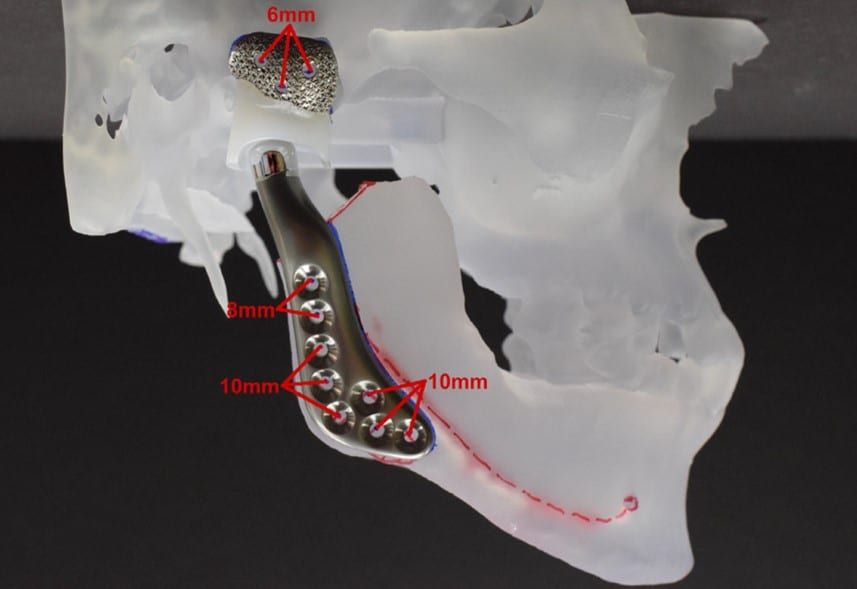
Dr. Bobek is known in the Pacific Northwest for his surgical expertise with TMJ joint replacement. He has treated more than 150 patients with joint replacement.  Our most frequently used device is the Stryker TMJ Concepts device.  They fabricate custom titanium joints based on your actual anatomy. This allows for a customized and precise surgical planning with positive patient outcomes. 

Unfortunately, the history of TMJ replacement in America started with failure. The first devices in the 1960s and 1970s were taken off the market by the FDA in 1991. Government oversight picked up from there as people were getting worse with some TMJ replacement devices.  Four devices were followed by the FDA starting in 1998 to evaluate outcomes. Over the next 30 years, two devices have demonstrated the safety and good patient outcomes to be still be on the market in America.  Since the 1990s, we have learned extensively from our orthopedic surgery colleagues.  Modern TMJ replacement has very similar outcomes as orthopedic hip or knee joint replacement. 

Once you have exhausted all nonsurgical methods or are in a situation where nonsurgical methods don’t help, replacement should be considered. There are replacement options using your own body (autogenous grafts), but you will notice those parts missing. Costochondral (rib) grafting involves removing your 5th or 6th rib to be placed into your jaw joint. With this operation, there is at least a 50% reoperation rate in the first 10 years. The other options involve removing your lower leg bone (fibula) or second toe (metatarsal) through free flap transfer. These are very invasive operations that require connecting the blood vessels of your flap to the neck or face.  For most people, TMJ replacement devices are the best bet.

Orthodontics are often used in the care of patients who are having a TMJ replacement.  Orthodontists use braces or invisalign to help align the teeth prior to and after TMJ replacement surgery.  For many people, orthodontics are not necessary but we will discuss the pros and cons in your situation. 

Metal allergy, specifically nickel allergy, is a common issue with TMJ replacement.  While the device is largely made up of titanium, the condylar component has a Cobalt-Chromium alloy.  The FDA allows for compassionate use of a device that does not contain that alloy (all titanium device) if you have a documented metal allergy to one of the components. We can arrange for your blood to be tested through orthopedic analysis to verify your allergy. 

While the percentage risks are low, the consequence of complication is high. Joint infection happens 1-2% of the time and often requires further surgery to manage. The expected life of the devices is thought to be at least 20 years but we don’t currently recommend device replacement until they break. 30 year data seems encouraging thus far.   Bone growth over the devices can happen over time and we place abdominal fat over the devices to minimize bone growth. Lastly, typical surgical complications like nerve injury, scarring and bleeding are possible. We will talk with you about your risks at your visit. 

With just TMJ replacement, you will be able to chew soft foods right after the surgery. We want you rehabilitating as soon as possible after the surgery and we will give you a jaw stretching device immediately after your surgery.  We will also want you to meet a physical therapist before surgery as everyone who has TMJ replacement will need physical therapy after the operation. Luckily, we have many options in the Seattle area. 

For some people, upper jaw surgery happens at the same time as joint replacement. When this happens, we need the upper jaw to heal before chewing. This is a process that can take 2-3 months. 

Recovery after joint replacement can take several weeks to months. Your surgery is done at either the hospital or our surgery center. At the hospital, you may be admitted for one night after surgery.  Life is pretty different for the first week and you are followed in clinic with post-operative appointments at 1, 3, and 6 weeks and 6 months. Patients start TMJ physical therapy about 2 weeks after surgery. At this time, they can generally return to work and begin many normal jaw functions. Given the core functions that the TMJ supports, we generally estimate that it takes 6 months before patients stabilize into their new normal state following joint replacement

Many medical insurances do have coverage for TMJ replacement.  We will be able to send your information to your insurance company to find out about coverage. Unfortunately, we are aware of plans that do not cover TMJ surgery. In those situations, cash pricing and payment plans exist.  

Seattle Jaw Surgery provides expert orthognathic care for patients throughout the Pacific Northwest. Orthognathic Surgery is the medical term for Jaw Surgery. It is a surgery to reposition the jaws to correct alignment. This realignment allows teeth to fit when misalignment cannot be solved by orthodontics alone.

We think it is reasonable to consider going through jaw surgery for a few reasons. Most frequently, the upper and lower teeth fit in a way that makes chewing and biting difficult. This match between the upper and lower teeth is referred to as your bite (occlusion.)   

If the occlusion is incorrect, you will hear the term malocclusion (bad bite.)  Common malocclusions are referred to as overbites, underbites, crossbites, and open bites.  These conditions are frequently related to the underlying structure of the bone being mismatched to the opposing bone.  Those two bones are the maxilla (upper jaw) and mandible (lower jaw).  When the lower jaw is too far forward (mandibular hyperplasia), or the upper jaw is too far back (maxillary hypoplasia), an underbite is present.  When the lower jaw is too far back (mandibular hypoplasia), or the upper jaw is too far forward (maxillary hyperplasia) there is an overbite.  the front teeth don’t touch (anterior open bite), the back teeth don’t touch (posterior open bite)

While malocclusions can lead to difficulty with biting and chewing, the cause of the malocclusion can cause other functional problems.  Small lower and upper jaws are associated with difficulty breathing during the day and night.  This is because there is less space for the tongue and soft palate to live.  You are good at compensating for this and the most common compensation is head position. People come in with neck pain and postural concerns because the are chronically adapting to their poor jaw position.

Underbites and open bites are associated with speech difficulty.  The tongue forms many sounds by touching the roof of the mouth behind the front teeth. If the front teeth are far away from the tongue, it can be difficult to speak.  Air escape can happen as well with front teeth that don’t touch. 

Jaw joint (TMJ) issues are complex but with severe malocclusions, people often find fatigue with chewing. This is because only a few teeth work to chew. Many chewing cycles can wear out the joint. 

Upper and lower jaws are mismatched for variable reasons. Common causes are TMJ arthritis, trauma, congenital issues, growth abnormalities, open mouth breathing, low muscle tone, jaw tumors or systemic issues. 

Jaw surgery is completed under general anesthesia as an outpatient surgery.  It is used to treat several conditions including a severe underbite or overbite, open bite, jaw or facial asymmetry, sleep apnea and others.

Typically, patients find themselves in our office after seeing an orthodontist. The orthodontist will make the recommendation based on your jaw alignment.  Surgery may be needed in addition to orthodontic treatment to correct your bite. They would refer you to discuss orthognathic surgery with a maxillofacial surgeon.

Your initial consult in our clinic will consist of one of our surgeons taking a history, doing an examination, reviewing your clinical photos and any available imaging. They will then discuss what is involved with jaw surgery and anticipated surgical intervention. You will also be shown a cartoon demonstration video of how jaw surgery is used to reposition the jaws. After this consult you return to your orthodontist to begin orthodontic treatment.

The traditional timeline for jaw surgery patients is to be in braces for a period of time, on average this is about 6-18 months to straighten and align the teeth prior to surgery. Then the orthodontist will tell the patient when they are close to being ready for surgery. It is then that you follow up in clinic for a recall visit. One of our maxillofacial surgeons will do another exam and we will take updated photos. The surgeon will then have a better idea of what surgical treatment they recommend. At this recall if you are ready for surgery you will meet with one of our care coordinators to schedule a surgery date.

You return to clinic to obtain presurgical records. These records include an updated CT scan and an optical scan of your teeth. These are used by the surgeons to complete your virtual surgical planning (VSP). This is a way to customize the surgery to each individual patient. At your preoperative visit we will discuss the process of surgery at the hospital, review your specific plan for surgery, and review instructions for recovery after surgery.

Surgery takes place at the hospital; you spend one night in the hospital after surgery and are discharged the following day. We see you in clinic for your post operative visits at 1, 3, and 6 weeks after surgery and then 6 months after surgery.

Jaw Surgery

Did you know?

Though only an oral surgeon can let you know if jaw surgery is right for you, there are some signs and symptoms that the procedure could be right for you:

  • Your lips do not meet in your natural bite
  • Your jaw protrudes noticeably forward
  • Your chin is receded backward
  • Your face seems unbalanced
  • You have open space between your upper and lower arches when your mouth is closed
  • You have breathing difficulties during sleep
  • You find yourself breathing primarily through your mouth
  • You have difficulty chewing and/or swallowing food
  • You have excessive wear on your teeth
  • You have ongoing jaw joint pain
  • You suffer with chronic headaches

You may be a candidate for corrective jaw surgery if you have a malocclusion (bad bite) that is caused by poorly aligned jaws. Only a complete consultation with an oral surgeon can help you determine whether jaw surgery is right for you.

At Seattle Jaw Surgery, you will be evaluated by Dr. Bobek to determine if surgery is right for you.  If you can avoid surgery he will be honest with you! If you could benefit from surgery, he will discuss the pros and cons.  

The decision to recommend surgery is based off of the individual. Functional troubles, clinical examination, radiographs (xrays), history, orthodontic exam and dental impressions are all considered when recommending for or against surgery. 

On the day of your operation, you’ll be placed under general anesthesia. An incision will be made on the inside of your mouth, through which your surgeon will reposition your jaws. Some jaw surgeries involve bone shaping, which may include shaving some bone away or grafting new bone into the jaw. A combination of plates, screws or wires may be used to hold the jaw in place before your incision is closed.

Please view our jaw surgery techniques on our videos page.


Yes. The initial healing phase is usually a few weeks long. During this time, you’ll be placed on a modified diet and instructed to avoid certain activities. It is important to take all medications as prescribed and to keep the incision site clean and free of debris. Your jaw may be swollen and sore for several days after surgery. Be sure to contact your doctor if you experience fever or any discomfort that worsens with time. Keep in mind that your jaw will continue to heal over the course of several months – a process that can take up to one year to complete.

Jaw alignment is an important part of oral health. When the jaw is out of alignment, it can negatively affect the bite, as well as the function of the mouth. Some misaligned jaws are so problematic; they cause abnormal wear on the teeth and other secondary symptoms, such as headaches. Also known as orthognathic surgery, jaw alignment surgery is meant to address irregularities that impair the normal function of the jaws. By undergoing corrective jaw surgery, patients can improve their bite, speech, and appearance – not to mention alleviate other side effects.

Did you know?

Though only an oral surgeon can let you know if jaw surgery is right for you, there are some signs and symptoms that the procedure could be right for you:

  • Your lips do not meet in your natural bite
  • Your jaw protrudes noticeably forward
  • Your chin is receded backward
  • Your face seems unbalanced
  • You have open space between your upper and lower arches when your mouth is closed
  • You have breathing difficulties during sleep
  • You find yourself breathing primarily through your mouth
  • You have difficulty chewing and/or swallowing food
  • You have excessive wear on your teeth
  • You have ongoing jaw joint pain
  • You suffer with chronic headaches

You may be a candidate for corrective jaw surgery if you have a malocclusion (bad bite) that is caused by poorly aligned jaws. Only a complete consultation with an oral surgeon can help you determine whether jaw surgery is right for you.

You’ll be evaluated by an oral surgeon to determine if oral surgery is right for you. In some cases, a bad bite can be treated with orthodontics alone. In others, a combination of orthodontics and jaw surgery, or jaw surgery alone is used to correct alignment issues. If you require orthodontic treatment, treatment will occur prior to jaw surgery.

X-rays will be taken of your teeth in a pre-surgical consultation. On the day of your operation, you’ll be placed under general anesthesia. An incision will be made on the inside of your mouth, through which your surgeon will reposition your jaws. Some jaw surgeries involve bone shaping, which may include shaving some bone away or grafting new bone into the jaw. A combination of plates, screws or wires may be used to hold the jaw in place before your incision is closed.

Please view our jaw surgery techniques on our videos page.


Yes. The initial healing phase is usually a few weeks long. During this time, you’ll be placed on a modified diet and instructed to avoid certain activities. It is important to take all medications as prescribed and to keep the incision site clean and free of debris. Your jaw may be swollen and sore for several days after surgery. Be sure to contact your doctor if you experience fever or any discomfort that worsens with time. Keep in mind that your jaw will continue to heal over the course of several months – a process that can take up to one year to complete.

Sleep apnea is a disorder characterized by frequent pauses in breathing during sleep. There are two main types of sleep apnea: 

Obstructive sleep apnea (OSA) occurs when a person’s airway becomes partially or completely blocked during sleep. When this happens, the person will wake up briefly to breathe. The person may or may not remember these waking events. 

Central sleep apnea (CSA) occurs when the brain fails to send signals to the appropriate muscles that coordinate breathing during sleep. CSA is far less common than OSA. 

Common symptoms of OSA include:

  • Frequently waking up in the middle of the night choking or gasping for air
  • Loud snoring
  • Excessive daytime sleepiness
  • Morning headaches

In order to diagnose OSA, a sleep study performed by a sleep specialist will be necessary. These studies are done overnight at a specialized laboratory where the person sleeps while connected to numerous sensors. Home sleep tests (HSTs) are also an option. They can be more convenient and cost-efficient but are generally less reliable. 

Though snoring is a primary symptom of sleep apnea, not all people who snore have sleep apnea. Harmless snoring does not interfere with breathing patterns while OSA causes breathing cessations and sometimes ‘gasping’ during sleep.

Our first goal will be to determine whether your snoring is benign or a symptom of sleep apnea. This may be determined by speaking with you and your partner about your symptoms. If you do not have a partner who can confirm snoring or breathing interruptions, your doctor may request a sleep study if one has not been performed in the past. 

Weight loss, exercise, and reduction of alcohol consumption are commonly advised to patients with OSA. There are a number of additional treatment options depending on the condition’s severity:

  •  Nonsurgical

    • Positional therapy aims to train the person to sleep on their sides rather than their back as OSA symptoms can be exacerbated when the person sleeps on their back. This is because it is easier for the tongue and muscles around the throat fall and restrict the airway due to gravity when in that position.
    • Oral appliances are devices designed to fit in a person’s mouth during sleep. These include mandibular advancement devices (MADs) which pull the lower jaw and tongue forward or tongue-stabilizing devices (TSDs) which hold the tongue in a forward position. Oral appliances are usually prescribed by a sleep specialist, orthodontist, or dentist. 
    • PAP therapy stands for positive airway pressure therapy and is an umbrella term for a treatment where a machine is used to keep the person’s airway supported during sleep. The person wears a mask when going to sleep and air is pushed into their airway which prevents it from collapsing. CPAP, APAP, and BiPAP are all forms of PAP therapy. 
    • Weight loss – 
  • Surgical

    • A uvulopalatophryngoplasty (UPPP) is a procedure where the soft tissues around the throat, including the uvula, soft palate, tonsils, adenoids, and/or pharynx are trimmed or rearranged in a way to increase the size of the patient’s airway. UPPPs are usually performed by ENT physicians. 
    • Maxillomandibular advancement (MMA) is a procedure where both the upper and lower jaws are moved forward to expand the size of  the patient’s airway. 
    • Genial tubercle advancement (GTA) is a procedure where the tongue is moved forward in the patient’s mouth. This is often performed in conjunction with another procedure such as a UPPP or MMA. 

The temporomandibular joint (TMJ) is the area where the jaw meets the skull.  These joints are are some of the most used in the body.  When they cause pain or limit function, they can severely impact a persons overall quality of life. 

We are here to help. 

The temporomandibular joint (TMJ) is where the jawbone (mandible) connects to the skull and is one of the most frequently used joints in the body.  Just like other joints in your body, your jaw joint can have problems.  Luckily most of the problems are temporary and very responsive to common sense solutions.  For a sudden onset of discomfort or soreness in the jaw, conservative treatment such as jaw rest, anti inflammatory medications and  stress reduction can make you feel better.  

A TMJ disorder is anything that persistently interrupts the normal functioning of your jaw joints.  Pain or dysfunction that is persistent through conservative treatments may warrant a further evaluation by a specialist.  Common disorders are muscle hyperactivity/spasm/inflammation, tendonitis, a decoupling of the movement of your disc to your jaw and skull (internal derangement) or inflammation of the joint capsule. 

Worrisome symptoms that may warrant a more urgent evaluation to a surgeon are face weakness, complete inability to open your mouth, weight loss (not explained by diet), or facial numbness.

  • Pain around the jaw joints, jaw muscles, temples, ears, neck, or teeth
  • Clenching or grinding
  • Limited jaw opening
  • Jaw locking
  • Chronic jaw dislocation
  • Headaches
  • Ear pain, swelling, or ringing
  • Change in the way the teeth fit

Nonsurgical

Mild cases of TMJ disorder are treated with conservative measures such as jaw rest, massage, or over-the-counter pain medications. Symptoms can also be exacerbated by stress, so stress management is recommended to reduce the severity of TMJ symptoms.

If these measures do not improve the patient’s condition, further treatments may be necessary. These include physical therapy, dental guards/splints, acupuncture, massage, chiropractor care, botox, or prescription medications. Such treatments are usually provided by a physical therapist, primary care doctor, rheumatologist, ENT specialist, or a dentist.  There are dentists that specialize in this through extensive training or through an oral medicine residency. 

Surgical

Surgery may be a consideration if certain problems exist or if nonsurgical care has not improved the situation.

Arthroscopy is a minimally invasive procedure where two small incisions are made at the joint. The first incision allows for a camera to be inserted. This allows the surgeon to visualize the joint structure and identify the issues.  The second incision is to allow small surgical instruments to be used to clear scar tissue, release the capsule or inject medications.  This is a very good option for joints with less arthritis present. 

Arthrocentesis is a minimally invasive procedure where one or two needles are inserted into the joint and fluid is injected into the joint. This washes away inflammatory byproducts and lubricate the joint. We use saline, steroid, blood or PRF to inject into the space. This is a good option for inflammatory arthritis flare ups and acute closed lock. 

Arthroplasty is an open-joint procedure where the joint is surgically altered or reshaped to repair its structural problems.  The disc can be removed if it is broken and abdominal fat is inserted to cushion the joint. If the disc is not broken, it can be repositioned and secured with a joint anchor.  This is a good option for more severe arthritis and for joint tumors.

Joint replacement is a procedure where the damaged joint is replaced by a prosthetic joint. This procedure is usually reserved for chronic and severe cases of TMJ arthritis. It is an excellent option for some congenital problems, fusion of the joint to the skull (ankylosis), replacing previously failed devices, and severe fractures. This is an excellent option in otherwise hopeless situations.

There are some disorders where surgery is recommended early in the treatment plan.  Here are some situations where you should visit us first:

  • Ankylosis – fusion of your jaw to your skull
  • Tumors – such as osteochondromas, synovial chondromatosis, pigmented villonodular synovitis, or benign jaw cysts that include the condyle
  • Fracture – this is particularly true in fracture dislocations
  • Development abnormality – things such as Hemifacial Microsomia, Condylar Hyperplasia or a patent foramen of Huschke
  • Acute closed lock – this is a jaw joint that locks closed suddenly.  Arthrocentesis is a minimally invasive solution to this and can be done in an office setting with relatively little risk. 
  • Failed TMJ replacement device

TMJ VIDEOS

Did you know that the majority of American adults over age 35 are missing, at least, one natural tooth? What’s more is that 1 in 4 seniors age 74 and older are missing all of their permanent teeth. Although dentures and bridges are a prosthetic option, they do not provide the same benefits available with dental implants. Implant dentistry prevents others from recognizing teeth as ‘false,’ and it also prevents the jawbone from disintegrating and any remaining natural teeth from shifting.

Dental implants are devices inserted into your jaw bones to provide structural support for artificial teeth like crowns or bridges. Implants can improve your ability to chew, your cosmetic appearance, and your jaw bone health. 

You may be a candidate for dental implants if you are missing one or more teeth. You will need a complete surgical consultation with X-rays to determine whether you are in good health and have adequate bone structure to support dental implants. We will also ensure that you do not have any existing health conditions such as gum disease that could complicate the procedure. In some cases where the bone is not dense enough to support an implant, surgical bone grafting may make it possible to support one in the future. 

If your oral surgeon determines that dental implants are right for you, expect the procedure to require multiple visits over the course of several months. The first treatment visit is the one when implants will be surgically placed within your jawbone. You’ll be sedated and under anesthesia during the process to ensure your comfort. Once the implants are in place, an impression will be taken and used to form crowns or dentures that will be secured to implant abutments above the gum line.

The implants will need to heal for a period of 6 to 9 months before you can have your final crowns or dentures placed. During this time, it is common to experience some swelling and soreness, as well as bleeding and minor bruising near the surgical site. Your oral surgeon will recommend eating only soft foods during the first several days following implant surgery. It is also important to follow all instructions for post-surgical care, including cleaning the surgical site and using any medications as prescribed. Be sure to contact your surgeon if you experience any fever or discomfort that worsens after a few days.

If you have broken any of your facial bones, call us to schedule a visit today.  It can be confusing navigating the urgent care/ER/trauma system and delayed care can negatively influence your outcome.  We can help get you back to your preinjured self. 

  •  Mandible fracture, particularly fractures of the condyle and subcondylar process
  • Upper jaw fracture – Lefort I, II, III fractures
  • Fractured cheek bones (zygomatic arch)
  • Eye socket fracture also known as orbital floor/wall fractures
  • Teeth that have been dislodged or knocked out

At our office, we believe in treating the injury to restore both the function and form of your face. There are nonsurgical options for some minimal injuries.  If surgery is needed, we will discuss the pros and cons of a closed approach versus an open approach. A closed approach frequently involves wiring of the teeth together.  If an open approach is best, you will be able to open and close your mouth following the surgery.  We take special care to protect the nerves, muscles, tendons and ligaments in the treatment area while utilizing methods that minimize scarring after recovery.

Cracked, broken and dislodged teeth are very common injuries among people of all ages. While we have extensive dental training and experience under our belt, seeing a general dentist is best for teeth injuries.  Sometimes bone and teeth are lost and we play a role in your multidisciplinary team lead by your general dentist. Our role is to perform complex reconstruction through jaw surgery, bone grafting and dental implants. We want to get you back to you. 

If you or someone you know has suffered a facial trauma after an accident, seek emergency attention right away. While in the emergency room, you may be seen by a resident or a staff consulting surgeon. As a private practice, we can see you in our facility during business hours when you are discharged. Please let us know if the ER took CT scans so that we can review them with you at your visit. 

Facial trauma is complex and the initial (primary) repair may need a second (revision) surgery.  The injury we see most commonly for revision surgery are fracture dislocations of the TMJ.  If your teeth were wired/banded shut and now your jaw doesn’t quite work right, please call us today.

 Anesthesia is a safe and predictable aspect of the surgery process. We offer in office IV sedation and general anesthesia. There are some general prerequisites and instructions that patients must follow prior to anesthesia to ensure the safety of the procedure. It is important that all patients undergoing anesthesia thoroughly read and understand the directions we provide prior to the procedure and contact our office with any questions or concerns.

Intravenous anesthesia sedation is a very safe and effective means of preventing pain and reducing patient anxiety.  We use this during more minor surgical procedures such as hardware removal, TMJ arthrocentesis, dental implant placement, or tooth extraction. Most frequently, this is administered by Dr. Bobek during the procedure. This has a relatively quick recovery and a lower cost. Think wisdom teeth removal or colonoscopy and it is this kind of anesthesia.

General anesthesia requires respiratory support. This is the level of anesthesia offered by Anesthesiologists at our Office Based Surgery Center or at the Hospital.  This level of anesthesia causes a bit of a sore throat and typically takes longer to recover from. This allows us to perform complex jaw reconstructions and is absolutely necessary for orthognathic or TMJ surgery. 

In most cases, patients will not be allowed to eat or drink anything  after midnight the night before the surgery. This is to be sure the stomach is empty.  A rare complication with anesthesia is that you may accidentally breathe in your stomach contents (aspiration.)  Surgery will be rescheduled if you have breakfast.  The good news is that clear liquids such as water, clear juice, or black coffee are fine up to 2 hours prior to surgery.  If you have a later surgery, you can wake up early to have a light breakfast of toast or cereal 6 hours prior to surgery.  

No. We require that all patients undergoing anesthesia at our office arrive for their procedures with a responsible adult driver. It is not possible for you to safely drive after your procedure, nor should you drive a vehicle or operate heavy machinery for at least 24 hours after your procedure. It is normal to remain drowsy during this time as your body gradually eliminates the sedative agents used during the procedure. If you do not have a car then we still need you to bring a responsible adult to help get you home on a ride share or public transit.  

We recommend wearing loose, comfortable clothing when you arrive at our office. Contacts, dentures, and detachable bridgework must be removed prior to surgery. Please also avoid wearing makeup, fingernail polish and jewelry the day of the procedure.

Ask our team about our anesthesia options and costs.